

Apple: The giant that’s growing bigger
January 28, 2018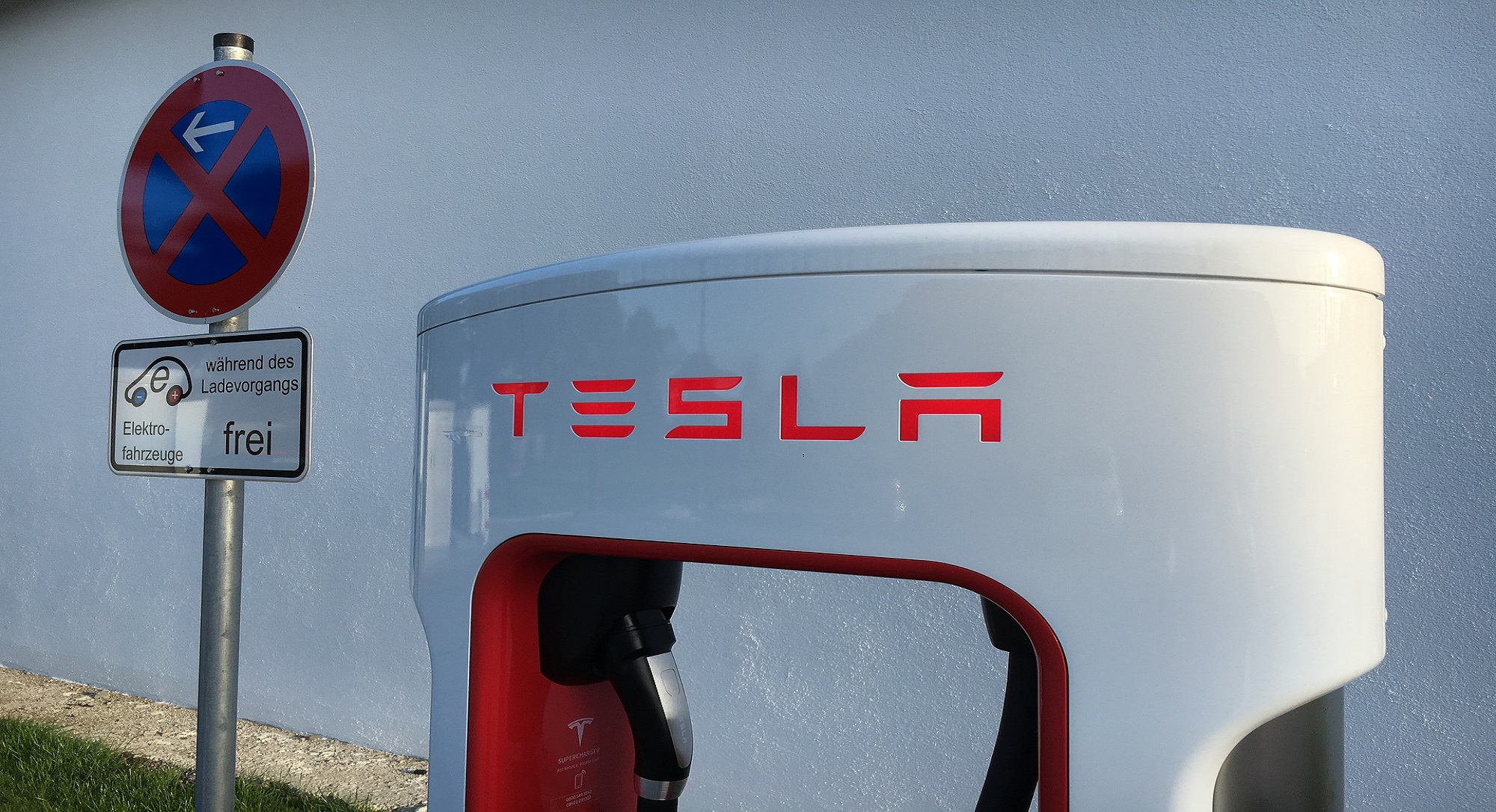
This article was written in September 2016 – right after the disclosure of Tesla’s quarterly financials. Though a lot of things have changed since then – i.e. the first model 3 cars have already hit the road, this article has remained quite relevant for understanding the different aspects of Tesla’s business model and the way it’s changing the global ecosystem of the automobile industry.
Tesla Motors Inc., the visionary American automotive company has posted the 13th consecutive quarterly loss in early August of 2016. However, the loss of $293 million has little impact on its share price as investors tend to uphold their faith on Tesla’s capability of changing the face of the automotive industry forever. The company’s striking market capitalization of $32 billion (as on 27th August, 2016) despite continuous loss further reflects its highly optimistic prospects from the investors’ standpoint. Retaining investors’ faith for such a long time is absolutely impressive and the company has gone through extensive measures to sustain that rock-solid confidence. For understanding those measures, the mission of Tesla needs to be understood first – “to accelerate the advent of sustainable transport by bringing compelling mass market electric cars to market as soon as possible.”
Well, availing electric cars to the mass market is not an easy task and Tesla is turning this futuristic goal into reality through an ingenious business model. First of all, the company didn’t go for the mass market right after the inception. Because in that case, the beginner car maker might have lost in the marketplace without even having a chance to prove the competitive supremacy of all-electric cars over their mighty gasoline counterparts. Rather, Tesla planned to surprise the market with high-priced, luxurious all-electric cars and then use the financial success of those products to create electric vehicles for masses.
Following the plan, Tesla dazzled the market in 2006 with a luxury sports car named Tesla Roadster. The car had a base price of $109,000 and could travel 393 kilometers on a single charge. Then came Tesla Model S in 2012 which was priced at $75,000. Despite the comparatively lower pricing, this Sedan had a single-charge maximum range of 510 kilometers! In 2015, Tesla started delivering Model X, a crossover SUV with a price tag starting from $74,000. After successfully launching these 3 models, Tesla finally unveiled its long-awaited ‘car of masses’ in June 2016 – the ‘Model 3’ which is planned to hit the road by 2017.
This $35,000 car has already received more than 400,000 pre-orders which proved that Tesla’s business model is working; thus playing a vital role in retaining investors’ confidence. Most recently, Tesla’s widely celebrated CEO Elon Musk stunned the automotive industry once again with his late August announcement of P100D, a variant of Model S car with ludicrous mode update which is the quickest production car in the world. This car can accelerate 0-60mph in only 2.5 seconds and also is featured with a 100 kWh battery pack that provides with a single-charge range of 315 miles, beating the threshold of 300 mile range for the first time in the history of electric vehicles.
Apart the car itself, Tesla’s business model integrates three other elements – direct selling, the combined sales/service concept and the supercharger network. Unlike its competitors, Tesla doesn’t believe in dealership system. Rather, the company sells through direct sales centers – some of which also act as service centers and known as Service Plus outlets. This practice helps Tesla to provide better customer buying experience and to ensure the best branding for their products while cutting the intermediation cost significantly. The supercharger network, where drivers can charge their Tesla car absolutely free of cost has solved another biggest problem of electric cars – recharging. The existing network of 691 Supercharger stations throughout North America, Asia, and Europe is expanding rapidly to serve future Tesla customers.
Apart the car itself, Tesla’s business model integrates three other elements – direct selling, the combined sales/service concept and the supercharger network. Unlike its competitors, Tesla doesn’t believe in dealership system. Rather, the company sells through direct sales centers – some of which also act as service centers and known as Service Plus outlets. This practice helps Tesla to provide better customer buying experience and to ensure the best branding for their products while cutting the intermediation cost significantly.
Already started to foresee Tesla as the future automotive leader? Well, there’s more to it. For meeting up the demand of a planned 500,000/year car production, Tesla is building a massive battery factory in Nevada, USA, named as ‘Tesla Gigafactory’. The factory is planned to produce batteries with the capacity of 35 gigawatt-hours (GWh) annually and reduce car production cost significantly through the economics of scale.
Also, Tesla has recently taken over SolarCity, a solar energy solution provider for $2.6 billion. This move can be considered as a big leap for Tesla towards its goal of being a sustainable, carbon-free transportation company. The takeover would also boost Tesla’s existing energy storage business and offer the company with an upper hand in its plans of providing affordable solar power to masses through improved solar panels and storage systems.
None of these remarkable feats have become true overnight. Since the inception, Tesla Motors has been facing numerous challenges that constantly barred the smooth road to success. For instance, the very business model of Tesla is extremely capital intensive. The ingenious idea of a grand opening with a luxury car and then producing low-cost cars for the masses from the proceeds of that overwhelming yet solid launch, the supercharger network, the direct sales system – all need huge funding for being the reality. Consequently, Tesla had to raise $6 billion in both equity and debt offerings for meeting up the massive capital requirement throughout the past 6 years. There were also numerous technical issues to resolve before launching each model of all-electric cars, resulting in lower than expected production level which ultimately led to the revenue shortfall.
Despite these challenges, all three of the car models that hit the road has proved to be the blockbusters of the industry. These battery-laden, virtually maintenance free engineering marvels are making the automotive industry way less complex, cost-effective, energy efficient and most importantly – environment-friendly. Furthermore, extremely popular features like Tesla autopilot ensure the customers with a relaxed yet exciting driving experience.
Tesla is pioneering the transition of the automotive industry from the traditional dependency on fossil fuel to the future of clean & sustainable electric power that would change the industry for good. The company has already topped the annual “World’s most innovative company” list of Forbes magazine twice in a row. Despite the fact that Tesla has lost money with each of its last 13 quarterly filings, the investors are apparently hoping that the company would pay them off handsomely once the high ambitions are fulfilled, on which Tesla is working vehemently. When’ll be that payoff begins? Well, the answer mostly depends on the success of upcoming Model 3 and the capability of the company of utilizing its pioneering status efficiently.